

Getting one vallenato legend into a studio is an event. Getting twelve of them onto a single album, each with an original song written specifically for them, is a two-year project. That is what Colombian singer-songwriter and producer Gusi has released with "Vallenato Social Club," out now and built around an idea that is simpler than it sounds: bring the genre's defining voices together in one place and let the music document what happens.
📖 YOU MIGHT ALSO LIKE
- Kany García Announces 76-Date "Puerta Abierta" World Tour, Closing in San Juan
- Young Musicians Unite's "Havana Nights" Gala Draws 900 to Mana Wynwood for Free Music Education Push
- Mariah Angeliq Steps onto Coachella Stage for the First Time
- FTC Live al Parque Brings Maroon 5, Myke Towers, and Yandel Sinfónico to Quito This August
Vallenato is Colombia's most recognized folk-rooted genre, declared an Intangible Cultural Heritage of Humanity by UNESCO in 2015. It was born in the Caribbean coastal region and built on four rhythmic forms: son, puya, paseo, and merengue. For decades, the genre operated largely within its own ecosystem, but a generation of artists including Jorge Celedón, Felipe Peláez, and Carlos Vives helped pull it toward mainstream Latin audiences without stripping the traditional structure. Gusi, a five-time Latin Grammy nominee, has spent his career operating at exactly that intersection, according to Billboard.
Gusi Built "Vallenato Social Club" City by City, Artist by Artist
The record did not come together in one location. Over the course of two years, Gusi traveled to Santa Marta, Valledupar, Barranquilla, Medellín, and Bogotá to record with each featured artist in person. The sessions were designed to be intimate rather than efficient. The goal, as Gusi described it, was to capture not just the vocals but the personality behind them.
The full roster spans multiple generations: Elder Dayán Díaz, Alfredo Gutiérrez, Jean Carlos Centeno, Luifer Cuello, Iván Villazón, Jorge Celedón, Karen Lizarazo, Rafa Pérez, Diego Daza, José Martín Bernier, Felipe Peláez, and Peter Manjarrés. Alfredo Gutiérrez, among the oldest voices on the record, is widely considered one of the foundational figures of modern vallenato. Karen Lizarazo represents a newer generation that has been expanding the genre's presence among younger audiences. Having both on the same tracklist, in songs written specifically to fit each of them, is the structural logic the whole album depends on.
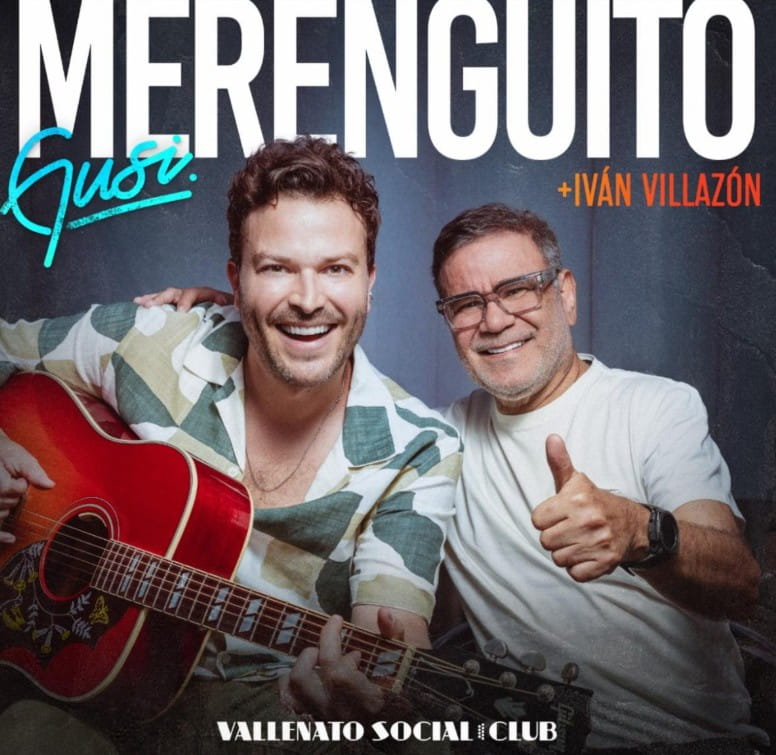
The focus track is "Merenguito," featuring Iván Villazón. It runs on a light, Caribbean-flavored production and tells a love-at-first-sight story with the kind of directness the merengue rhythm was made for. It is the track Gusi chose to anchor the release, and it does its job cleanly.
The Transmedia Layer That Separates "Vallenato Social Club" from a Standard Collab Record
Each of the 12 tracks has its own music video, and nearly all of them were filmed inside the recording studio to show the actual construction of each song. The exception is "Amor Viejo" with Peter Manjarrés, which was shot on location in Taganga, a fishing village just outside Santa Marta on the Caribbean coast, shifting from the studio intimacy to something more open and geographic.
Beyond the videos, the project includes a series of diary-style capsules, described as intimate conversations between Gusi and each guest artist, and a documentary featuring chroniclers and juglares reflecting on vallenato's origins and ongoing evolution. The transmedia approach is deliberate. "Vallenato Social Club" is positioned as a cultural document, not just a release.
"Vallenato Social Club is much more than an album; it's a meeting point," Gusi said. "It's a way to honor our roots, unite generations, and show that vallenato is alive, evolving, and ready to conquer new hearts."
The New York Times has covered the broader global appetite for Latin regional genres as streaming has removed geographic barriers between listeners and music rooted in specific places. "Vallenato Social Club" lands in that context, arriving as a project that takes the genre seriously on its own terms while making a case for its reach.
Written by
FAME EditorialFAME Editorial Staff is a collective of marketers, journalists, and media professionals covering the intersection of business, culture, and entertainment. With a focus on storytelling that informs and engages, the team produces interviews, features, and industry insights that highlight the people and ideas shaping today’s landscape. Through a blend of editorial perspective and real-world marketing experience, FAME delivers content designed to resonate with modern audiences and decision-makers alike.