


Biohackers World held its first New York Conference and Expo on June 27 and 28 at the InterContinental New York Barclay, drawing an estimated 1,500 attendees, more than 30 speakers, and over 60 exhibiting companies to Midtown Manhattan. The two-day event marked the brand's fifth city and its first appearance on the East Coast, following prior editions in Los Angeles, Miami, and Chicago.
📖 YOU MIGHT ALSO LIKE
- Beyond the Celebration: How Luxury Experiences Continue to Bring People Together in Miami
- La Fernetería Brings a $60 Three Course Menu to Its Wynwood Rooftop for Miami Spice
- Tequila Don Julio 1942 Turns Chelsea Piers Into a Waterfront Hub for the World Cup Final
- SUMMER FINE DINING AT HOME: SEAFOOD PAIRED WITH HAMILTON FAMILY WINES
The conference arrived at a moment when wearables, at-home biomarker tests, and microbiome panels have made personal health data more accessible than ever. According to organizers, that abundance of information was the real subject of the New York event. The problem attendees came to solve wasn't a lack of data, but a lack of clarity about what to do with it.
"People have access to more health data than ever before, but the challenge is understanding how to use it in a practical way," said Mick Safron, founder and CEO of Biohackers World, in comments released ahead of the event. Safron added that health strategies in a city like New York need to hold up against the realities of a fast-paced daily schedule, not just look good on paper.
That framing shaped much of the two-day program, which moved past simple data tracking toward frameworks for interpreting it. Sessions ranged from biomarker testing and microbiome analysis to stress physiology, recovery science, and the environmental factors that influence long-term health.

Who took the stage
The New York speaker lineup included Sarah Greenfield on microbiome science and disease prevention, David Korsunsky on AI-powered health systems, Dr. Patrick Porter on recovery and neuroplasticity, Dr. Jin-Xiong She on biomarker testing, and Valérie Orsoni on inflammation, aging, and health optimization. Additional sessions covered genetics, environmental exposures, and light-based technologies, alongside broader discussions of human performance and longevity.
The format mixed keynote talks with panel discussions and more interactive sessions, giving attendees room to engage directly with both the science and the technology on display, rather than sitting through a straight lecture circuit.
Inside the expo hall
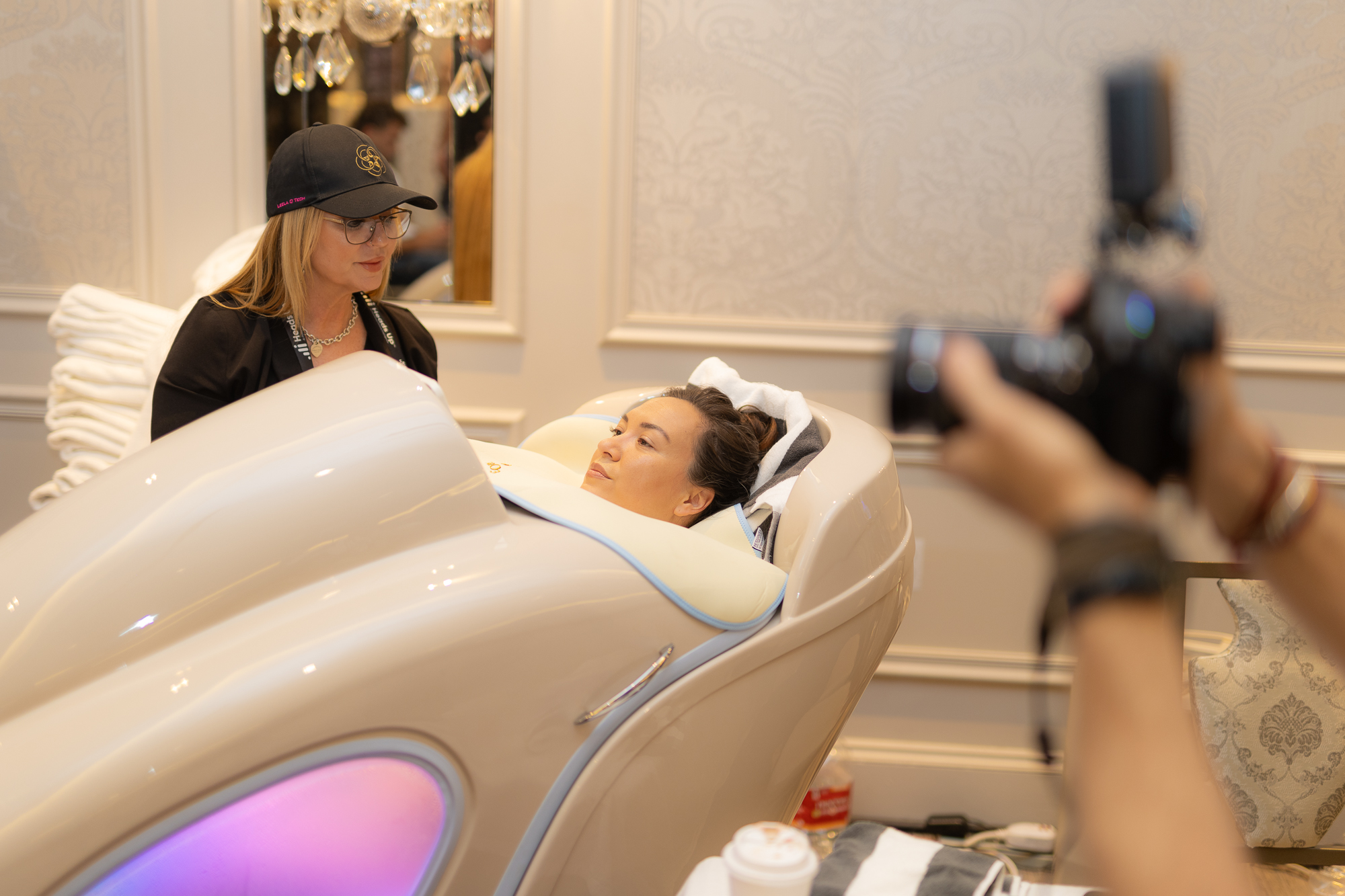
Beyond the main stage, the expo floor functioned as a hands-on complement to the talks. Attendees could test wearable health trackers, red light therapy setups, nitric oxide devices, and other recovery and longevity-focused tools, along with newer entries in the space like quantum wellness and regenerative technology. The idea, consistent with how Biohackers World has run its expo halls in other cities, was to let people try a device or protocol on the spot rather than just hear about it from a booth rep.

A young company with an expanding map
Biohackers World describes itself as a group built around a single goal: helping people live fuller, healthier lives by turning biohacking from a niche interest into something more widely practical. The company was co-founded by Safron and Olia Chernova, who serves as chief operating officer, and has since built out a small team covering partnerships, events, media, and community management.
Since launching, the company has expanded its footprint city by city, with events held or planned in Los Angeles, Miami, Chicago, Austin, San Francisco, and now New York. Each stop follows a similar template of keynotes, panels, and an expo hall, though organizers have said the specific themes shift depending on the city and its audience.
What it signals
The New York debut fits into a broader pattern for the wellness industry, one where the conversation is moving away from simply collecting personal health metrics and toward figuring out what those metrics actually mean for day-to-day decisions. Whether that shift sticks, or whether it's just the latest packaging for an industry that moves quickly from trend to trend, is the kind of question that tends to get answered at the next conference, not this one.
For now, Biohackers World has its foothold in New York. Whether the city becomes a recurring stop on the circuit, the way Los Angeles and Miami have, will likely depend on how attendees respond in the months ahead.
Written by
FAME EditorialFAME Editorial Staff is a collective of marketers, journalists, and media professionals covering the intersection of business, culture, and entertainment. With a focus on storytelling that informs and engages, the team produces interviews, features, and industry insights that highlight the people and ideas shaping today’s landscape. Through a blend of editorial perspective and real-world marketing experience, FAME delivers content designed to resonate with modern audiences and decision-makers alike.