

On her 32nd birthday, RaiNao released a body of work she had been holding for over a decade. Marcriá, her second studio album through RIMAS Entertainment, arrived as a 16-track self-produced project that moves through guaguancó, bomba, jazz, reggaetón, and experimental sound design while tracing a single, defined emotional arc from euphoria to mortality.
YOU MIGHT ALSO LIKE
- Techy Fatule Releases CHULA, Her Fourth Studio Album and Most Genre-Spanning Project to Date
- Myke Towers Drops "Una Na' Mas'" as the Official Song of LaLiga's End-of-Season Player Recap
- Sech Makes Surprise Appearance at Bad Bunny's Sold-Out Estádio Da Luz Show in Lisbon
- Mon Laferte Goes Jazz and Intimate on New Five-Track "Spotify Sessions" EQUAL Edition
📖 YOU MIGHT ALSO LIKE
The release puts the Santurce-born artist, known off stage as Naomi Ramírez Rivera, in a new position within Latin music. Her debut album, Capicú, arrived in February 2024 and established her as one of Puerto Rico's more distinctive producers, blending live horns and percussive rhythms into an alternative take on reggaetón. She had already appeared at South by Southwest in 2023 and caught attention on Bad Bunny's 2025 record Debí Tirar Más Fotos, which debuted at No. 1 on Billboard's Top Latin Albums chart, featuring her on "Perfumito Nuevo." Marcriá is the record she has been building toward.
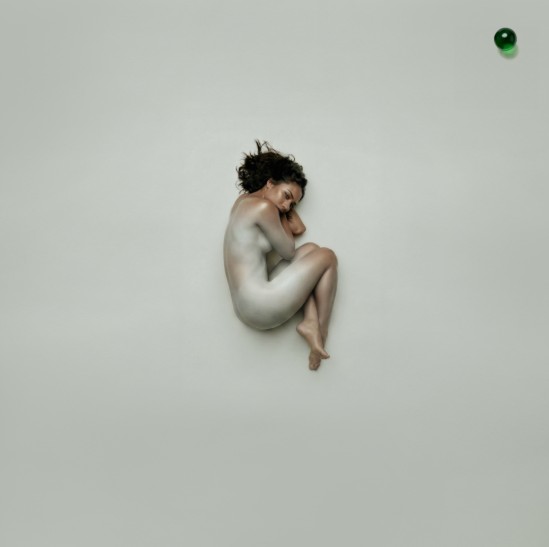
What RaiNao Constructed Inside Marcriá
The album traces back further than its two years of production. "He estado creando este álbum durante los últimos dos años, pero todo comenzó mucho antes, con una experiencia hermosa en mi crianza que despertó algo inexplicable dentro de mí. He guardado esa experiencia en los lugares más protegidos de mi memoria y, 13 años después, la convertí en canciones," she said. RaiNao wrote and produced every track, plays saxophone and percussion throughout, and developed the project in close collaboration with sound engineer and co-producer Wiso Rivera, who handled much of the sonic engineering.
The album opens with a state close to elation. "Teaser" starts the record on a high. "GRIS" pulls into imagined love. "Sofocón" turns up the heat. "Mariposas en el estómago," featuring bomba fusion collective El Laberinto del Coco, sits inside the tension of concealed attraction. As the record advances, it contracts inward. "ODIO A TU NOVIA" and "ε=┌(;・_・)┘" push through obsession and emotional release. "Cántaro" arrives as a meditation on death and memory. The closing title track incorporates a poem by Humacao-born poet Ángelamaría Dávila and does not so much resolve the album as absorb back into it. "Cada canción nace de tratamientos sensoriales," RaiNao said. "De colores, sabores, espacios reales, sensaciones, olores y texturas que llegan a mí a través de la virtud de estar presente. Marcriá fue hecho para sentirse."
Legends and Living Voices Join RaiNao Across the Tracklist
The featured artists are not decorative. Cuban singer Omara Portuondo, whose work with the Buena Vista Social Club brought Afro-Cuban music to global audiences in the late 1990s, appears on "dandovueltasdandovueltas," a song about cyclical passion. Puerto Rican reggae veterans Cultura Profética join for "dame la verde," a track built around uncertainty. Salsa icon Andy Montañez, one of the most recognized voices in Puerto Rican popular music, brings depth to "cántaro." Dominican band Solo Fernández appears on "tornasol," and multifaceted artist Frido Vargas contributes to "mareo." Together, the collaborations span Cuba, Puerto Rico, the Dominican Republic, and at least three decades of active Caribbean performance.
"Vivo con las ganas de tomar riesgos y el impulso de evolucionar y hacer crecer nuestros sonidos," RaiNao said. "Mis referencias más sinceras son los pilares de generaciones pasadas y los artistas valientes de mi isla y del Caribe. Me propuse inmortalizar algunas de mis voces caribeñas favoritas en este proyecto... esa es la verdadera definición de marcriá."
Beyond the audio, the project expands into a short film. "Oídos que ven GRIS" is a guided meditation piece written by RaiNao, built on the album's own sound design and layered with sensory frequencies. The film moves through memory activation and visual transformation, ending underwater before resurfacing at "GRIS."
For an artist still early in her catalog, Marcriá is a significant risk taken in full view. It asks listeners to follow an emotional thread across 16 tracks without the structure of a conventional single-driven release. Whether it expands her audience or pulls the existing one closer, it signals that RaiNao's ambitions within Caribbean music are not casual or incremental.
Written by
FAME Editorial Staff is a collective of marketers, journalists, and media professionals covering the intersection of business, culture, and entertainment. With a focus on storytelling that informs and engages, the team produces interviews, features, and industry insights that highlight the people and ideas shaping today’s landscape. Through a blend of editorial perspective and real-world marketing experience, FAME delivers content designed to resonate with modern audiences and decision-makers alike.
Written by
FAME EditorialFAME Editorial Staff is a collective of marketers, journalists, and media professionals covering the intersection of business, culture, and entertainment. With a focus on storytelling that informs and engages, the team produces interviews, features, and industry insights that highlight the people and ideas shaping today’s landscape. Through a blend of editorial perspective and real-world marketing experience, FAME delivers content designed to resonate with modern audiences and decision-makers alike.