


The last song Álvaro Díaz made with his closest creative partner is also the one that anchors his entire new album. On Friday, the Puerto Rican rapper released OMAKASE, his third studio album via Universal Music Latino, alongside the music video for its focus track, "PIENSO EN TI." The timing is not incidental. The video, filmed in Mexico City, functions as a tribute to Milkman, the producer and creative director who shaped Díaz's sound across multiple projects and died before the album's release.
📖 YOU MIGHT ALSO LIKE
- RaiNao Drops Second Album Marcriá, a 16-Track Self-Produced Exploration of Caribbean Memory
- Techy Fatule Releases CHULA, Her Fourth Studio Album and Most Genre-Spanning Project to Date
- Myke Towers Drops "Una Na' Mas'" as the Official Song of LaLiga's End-of-Season Player Recap
- Sech Makes Surprise Appearance at Bad Bunny's Sold-Out Estádio Da Luz Show in Lisbon
OMAKASE follows Sayonara, the record that marked a clear turning point for Díaz. After years building a reputation in Latin music's underground, Sayonara climbed the charts, landed on Rolling Stone's Best Latin Albums list, and earned several Latin Grammy nominations. The new album has moved quickly out of the gate, positioning at No. 1 in more than 16 countries, including Mexico and Colombia, debuting at No. 1 on Spotify's Top Albums Debut Global chart, and landing in the Top 5 on the U.S. Spotify debut ranking. Rolling Stone LaChicuela
Álvaro Díaz and Milkman's Final Collaboration, Preserved on Screen
"PIENSO EN TI." sits in the second section of the album, labeled Sazón / Salsa, and blends tropical elements with cumbia and reggaeton. It was the last track Díaz created with Milkman, who served as both producer and creative director throughout their years working together. The video pays tribute to one of Milkman's most recognized works, now preserved on screen. Caretas
Díaz spoke directly about what Milkman meant to the album and to him personally. "I consider Milkman to be a genius, and he's also my brother," Díaz said. "I had always wanted him to produce an album for me, and I used to ask him for beats, but he never wanted to give them to me... until I finally convinced him, and together we created this piece."
According to Remezcla, "PIENSO EN TI." captures the creative trust between the two, and the visual reflects how deeply Díaz was shaped by Milkman not just musically but visually, with the track functioning as a kind of genre-crossing tribute to a collaborator who operated across multiple artistic mediums. The song also incorporates the chorus and a sample from an unreleased Milkman composition, with Milkman's own voice left in the final version and credited accordingly. RemezclaThreads
Directed by Pampa and Kato, the Mexico City-shot video brings Milkman's artwork into the frame literally, placing a recognized piece of his visual work on screen. Díaz described the track itself as a statement about the album's logic: "It's a beautiful song and it defines that mix of the album, things you don't expect, like when the chef mixes elements that normally don't go together, like a cumbia and a reggaeton, but somehow it makes sense."

OMAKASE's Structure and the Critical Response
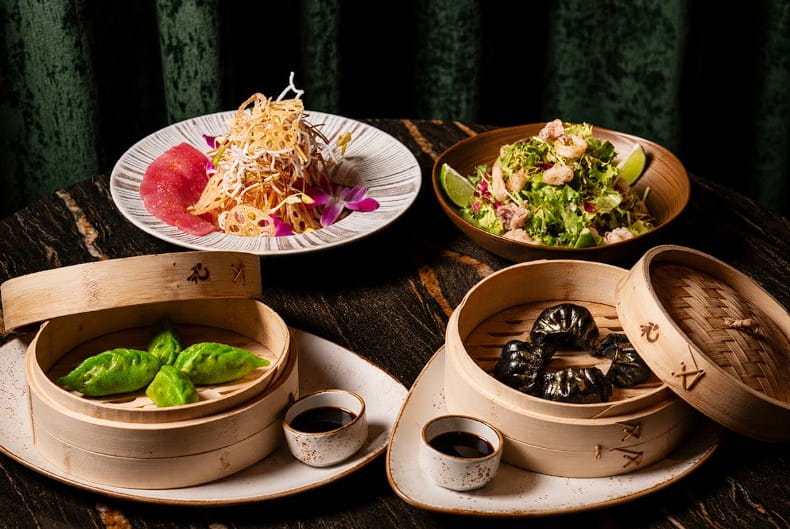
OMAKASE is divided into four distinct sections, with Díaz framed as chef and curator guiding listeners through a carefully built sonic experience, drawn from the Japanese culinary tradition of omakase, where the diner trusts the chef entirely to decide the menu. The album spans 16 tracks and features collaborations with Rauw Alejandro, Feid, Tainy, Jesse Báez, RUBI, and Latin Mafia, alongside production from Milkman, Sky Rompiendo, El Guincho, and others. LaChicuela
Critical response to the record has been pointed. In a feature tied to the release, Rolling Stone noted the album arrives after personal losses and a period of emotional and creative recalibration for Díaz. The LA Times, in its review, described the record as "a portrait of Latin music after the crossover era: full-on world building instead of translation." Genius called it his most ambitious album yet, noting that he continues to reshape reggaeton while pulling in cumbia and amapiano. Rolling Stone en Español described OMAKASE as "experimental, deeply melancholic," and one of the most singular Latin offerings of the current moment. Rolling Stone
The launch in Puerto Rico took physical shape at the T-Mobile District, where Díaz transformed the venue into an immersive experience modeled on the album's culinary concept, performing tracks from the album while RUBI appeared for a surprise set of "TREINEL.," the amapiano-leaning collaboration featured on the record. LaChicuela
For Álvaro Díaz, OMAKASE represents something beyond a follow-up. He has described Sayonara as the breakthrough that proved a decade's worth of independent work could cross over, but the emotional weight of the period surrounding that album, including personal losses, shaped what came next. OMAKASE holds that weight directly, especially in "PIENSO EN TI.," which closes one creative relationship and opens a new phase with a video that refuses to let it go quietly.
Written by
FAME EditorialFAME Editorial Staff is a collective of marketers, journalists, and media professionals covering the intersection of business, culture, and entertainment. With a focus on storytelling that informs and engages, the team produces interviews, features, and industry insights that highlight the people and ideas shaping today’s landscape. Through a blend of editorial perspective and real-world marketing experience, FAME delivers content designed to resonate with modern audiences and decision-makers alike.